Monday, June 27, 2016

Software The end is near: Say goodbye to the Windows 10 free upgrade

The deadline for a free Windows 10 upgrade is right around the corner. Find out what happens after the offer expires.

hero
Don't look now, but July 29, 2016, is coming up fast. That is the one-year anniversary of the release of Windows 10, which means the ability to upgrade to the new operating system for FREE will soon expire. (If you are interested, you can take a look at the official countdown here.)

In a January 21, 2015, Windows Experience blog post titled The next generation of Windows: Windows 10, we learned that Windows 10 would be a free upgrade. Author Terry Myerson said:

Today was a monumental day for us on the Windows team because we shared our desire to redefine the relationship we have with you—our customers. We announced that a free upgrade for Windows 10 will be made available to customers running Windows 7, Windows 8.1, and Windows Phone 8.1 who upgrade in the first year after launch.

A little over six months later, on July 28, 2015, Myerson penned another Windows Experience blog post, titled Windows 10 Free Upgrade Available in 190 Countries Today, in which he reiterated the free upgrade policy:

From the beginning, Windows 10 has been unique—built with feedback from five million Windows Insiders, delivered as a service with ongoing innovations and security updates, and offered as a free upgrade to genuine Windows 7, Windows 8.1 and Windows Phone 8.1 customers.

If you've been reading articles by Woody Leonhard or Paul Thurrott in recent months, you know that Microsoft has been upping its game with the Get Windows 10, or GWX, program it built into Windows 7 and Windows 8.1. It really wants every Windows user everywhere to be running Windows 10.

Any holdouts—Windows 7 or Windows 8.1 users who have been sticking to their guns so far—have only a few more weeks to go before losing their chance to get Windows 10 for free.

In a recent Windows Experience blog post titled Windows 10 Now on 300 Million Active Devices - Free Upgrade Offer to End Soon, Yusuf Mehdi, the corporate vice president of Microsoft's Windows and Devices Group, said:

...we want to remind you that if you haven't taken advantage of the free upgrade offer, now is the time. The free upgrade offer to Windows 10 was a first for Microsoft, helping people upgrade faster than ever before. And time is running out. The free upgrade offer will end on July 29 and we want to make sure you don't miss out. After July 29th, you'll be able to continue to get Windows 10 on a new device, or purchase a full version of Windows 10 Home for $119.

What will Windows 10 cost after July 29?

As Mehdi pointed out in his post, you will be able to purchase a full version of Windows 10 Home for $119.

But how much will Windows 10 Pro cost?

Well, if you head over to the Microsoft Store right now, you'll find that you can purchase both Windows 10 Home and Windows 10 Pro as a download or on a USB flash drive. Windows 10 Pro will cost you $199.99. And moving past the July 29 deadline for the free upgrade, it's a pretty safe bet that prices will remain the same—especially since they're the same price points that the full versions of Windows 8.1 Home and Pro sold for when that operating system was new.

Will there be upgrade versions of Windows 10 after July 29?

Since Microsoft provided free upgrades for a full year, I wonder if there will be upgrade packages for Windows 7 and Windows 8.1 users who decide to upgrade to Windows 10 after July 29. I suppose that it's possible, but then again, maybe not. When Microsoft introduced Windows 8.1 packages, it offered only the full versions—there were no upgrade versions of Windows 8.1. With that in mind, it's easy to speculate that this may also be the case with Windows 10.

Thursday, June 23, 2016

Making a Steak Without the Cow (BW)

The next meat may not come from an animal at all, as researchers find alternatives to unsustainable industrial farming.
Image result for steaks
A lot of people like meat. But the world’s appetite for animals comes with significant costs, both moral and environmental. From animal welfare to greenhouse gases, our history of large-scale, industrial animal farming just isn't sustainable.

That’s why researchers are working on new meat alternatives. No, not Tofurky. Insects. Deep-fried and eaten whole or ground up into a versatile powder, this protein source eaten in other parts of the world for millennia may find its way onto American menus in the next decade.

Even the next meat may not come from an animal at all. Impossible Foods, a California company, has been developing a hamburger patty that is closer to beef than any other simulation, yet has never come near a cow. They’ve even figured out a way to synthesize blood so as to give burgers their characteristic juiciness.

If one way to think about cattle and poultry is that they’re really just natural machines that turn plants (feed) into drumsticks and steaks, we may be approaching an era when we can take the animal out of the equation and make that transformation ourselves.


Tuesday, June 21, 2016

China Tops U.S. in Supercomputers

Top ranked system uses China custom CPU
The Sunway system in Wuxi used a custom China processor to hit 93 petaflops/s. (Image: Top500)

SAN JOSE, Calif. — A new supercomputer in China—the first made with processors designed and made in the People’s Republic—has been ranked the world’s most powerful system by far. The news comes as China tops the U.S. for the first time in both the number and performance of systems on the latest Top500 list.

The Sunway TaihuLight at the National Supercomputing Center in Wuxi hit 93 petaflops/second on the Linpack benchmark and a theoretical peak performance of 125.4 Pflop/s. It uses 40,960 Sunway SW26010 processors designed by the Shanghai High Performance IC Design Center.

China’s Tianhe-2 already held the title of the world’s fastest supercomputer for the last three years, but it was built using Intel processors and an interconnect chip designed in China.

“The Sunway TaihuLight is almost three times as fast and three times as efficient as the [Tianhe-2] it displaces in the number one spot,” said Jack Dongarra, a computer science professor at University of Tennessee and co-author of the twice yearly Top500 list. The system is five times faster than the top ranked U.S. supercomputer, the Titan, a Cray XK7 system at Oak Ridge National Laboratory that hits 17.59 pflops/s, making it #3 in the world.

“For comparison, the next large acquisition of a supercomputer for the U.S. Department of Energy which is expected to be approximately 200 Pflops/s will not be until 2017 with production beginning in 2018,” wrote Dongarra in an 18-page report on the Sunway system.

Dongarra sounded a notes of both praise for China and alarm for U.S. technologists in his conclusion of the report:

The Sunway TaihuLight system demonstrates the significant progress that China has made in designing and manufacturing large-scale computation systems…The fact that there are sizeable applications and Gordon Bell [award] contender applications running on the system is impressive and shows that the system is capable of running real applications and not just a stunt machine.

In 2001 there were no supercomputers listed on the Top500 in China. Today China has 167 systems on the list compared to 165 systems in the US. This is the first time the US has lost the lead…It is clear that they are on a path which will take them to an exascale computer by 2020, well ahead of the US plans for reaching exascale by 2023.

The latest rankings are the result of China’s focused spending on supercomputing over the last three to five years while spending in the U.S. slumped, said Horst Simon, deputy director of the Lawrence Berkeley National Laboratory  and another co-author of the Top500 list. The good news is the U.S. is getting back in the game with projects such as the National Strategic Computing Initiative, he said.

In particular, the competition to deliver the first exascale-class system has “never has been as close a race as it is now,” said Simon.

Monday, June 20, 2016

This $1.28 Million New Watch Is Made From Transparent Sapphire

The Double Tourbillon 30° Technique in an all-sapphire case.
The Double Tourbillon 30° Technique in an all-sapphire case. 

Transparency isn't just a buzzword in politics: For a few years now, it’s been a genuine trend in the world of luxury watches. For example, earlier this year, Hublot introduced its Big Bang Unico Sapphire timepiece cut straight from the sapphire—the first time the material had ever been cut on this scale.

And now from Greubel Forsey, maker of what are some of the most supercomplicated timepieces in the world, comes the Double Tourbillon 30° Technique. It's a watch the company's made for a while, but now it's offered in, you guessed it, an all-sapphire case. Greubel Forsey calls it the “pinnacle of transparency,” and it’s easy to see why. No metal is used at all in the creation of the dial and case (save for the winding pin), allowing for a panoptic view of as much of the movement architecture—and its dynamic interactions—as possible.

Cut from a single large sapphire crystal, including the rounded, multi-angular case horns, the entire movement is flooded with light within its 38.4mm case, allowing a view into its multi-tiered design from all angles. This is a more complicated watch than the Hublot, and uses sapphire in more places, including the crown. 

The reverse of the Double Tourbillon 30° Technique in all-sapphire.

Its actual 396-part movement may not be new—the patented tourbillon movement was first unveiled in platinum—but now its prowess is on full display. The hand-wound caliber, with 120-hour power reserve, packs two tourbillon escapements, one inside the other. Two tourbillons that rotate at different speeds are showcased here: An outer tourbillon rotates every four minutes while an inner tourbillon, every 60 seconds. All of this has helped the movement achieve a never-before-seen 915 out of a possible 1,000 points at the International Chronometry Competition.

Exclusive to the U.S. market in an edition of eight pieces to be individually created by hand over the course of the next three years, the watch is priced at $1.275 million.

The Double Tourbillon 30° Technique in sapphire, from the side.
The Double Tourbillon 30° Technique in sapphire, from the side

Friday, June 17, 2016

House lawmakers vote to reject ban on tech backdoors

The bill would have also prevented the federal government from forcing tech companies to include surveillance "backdoors" in their products.

massie.png

An amendment that would have prevented the US government from conducting so-called warrantless "backdoor" searches on millions of Americans' data has failed.

The bipartisan amendment failed in a vote 198-222 Thursday.

Reps. Thomas Massie (R-KY, 4th) and Zoe Lofgren (D-CA, 19th) introduced the amendment as an add-on to the annual defense budget bill.

Under existing law, the government doesn't need a warrant to access Americans' phone calls, texts and emails collected as part of its foreign surveillance dragnet.

By closing that loophole and forcing the government to get a warrant, Massie said in a statement on Wednesday that the amendment would strike "the appropriate balance between national security and civil liberty."

The amendment also would have forbid the government from forcing individuals, as well as companies -- like Google and Apple -- from installing backdoors for surveillance purposes in their systems.

It comes in the wake of the Apple-FBI fracas earlier this year, in which the law enforcement agency took Apple to court in an attempt to compel engineers to create a backdoor to an iPhone, used by one of the San Bernardino shooters. Apple refused the request.

In an emailed statement, Massie said his colleagues should "not abandon the Constitution in the face of terrorism."

"Unfortunately, proponents of warrantless surveillance mischaracterized our legislation and its bearing on the investigation in Orlando. Our amendment merely reasserts the constitutional requirement that the government have probable cause and a warrant, both of which are easily obtainable in the case of Omar Mateen," he added.

It's not the first time Massie and Lofgren's effort to strike down the so-called "backdoor search" rule has failed to become law.

An identical amendment was passed by the House last year in a 255-174 vote, but wasn't included in the omnibus bill it was set for. A year earlier in 2014, not long after the debut of the Edward Snowden disclosures, the same amendment passed 293-123, but failed to become law despite an overwhelming, veto-proof support.

Thursday, June 16, 2016

World’s Biggest Science Experiment ...

Seeks More Time and Money
  • Another $5.2 billion sought for project to prove fusion works
  • If successful, fusion reactors might enter service after 2050

The world’s biggest science experiment may get more time and money for completion when nuclear officials convene on Wednesday in France.

Image result for International Thermonuclear

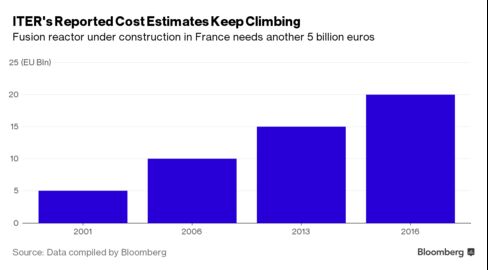
Supervisors of the International Thermonuclear Experimental Reactor, or ITER, are gathering for a two-day meeting in southern France to discuss whether to accept a revised timeline and budget, spokesman Laban Coblentz said by telephone. ITER Director General Bernard Bigot said in April that the 500-megawatt fusion reactor may need another five years and 4.6 billion euros ($5.2 billion) before it begins testing.

ITER has become the make-or-break demonstration project that will help determine whether nuclear fusion has a future as a source of energy and electricity. Unlike traditional nuclear plants, where atoms are broken apart, fusion makes energy by smashing atoms together at high speeds so that they merge into plasma burning hotter than the sun.

Scientists working on the ITER are trying to create 500 megawatts of power from plasma burning at 170 million degrees Celsius (338 million degrees Fahrenheit). The project would use only 50 megawatts of energy to cool and contain the reaction, proving the technology is a possible source of electricity and heat.

While fusion is decades away from deployment on any commercially viable project, it has a remained a well-funded goal since Soviet scientists tested the first tokamak reactor in 1956. The ITER reactor follows that design. Should it work, commercial fusion plants might coming online sometime after 2050.

ITER’s cost estimates have doubled to at least 20 billion euros since the project was approved in 2006. Construction began in 2013 in Cadarache, France, after decades of negotiation and planning among the consortium members: the U.S., China, the European Union, India, Japan, Russia and South Korea. The recurring delays and cost overruns have risked undermining fusion’s potential as a low-carbon-emitting power source to avert global warming.

The U.S. Senate has withheld funding and the Department of Energy -- which estimates costs to cover its 9 percent share in ITER could swell to $6.5 billion -- said last month it will reassess its commitment to the project in 2018.

“The U.S. remains concerned about the ITER members encountering problems in meeting the schedule needs of the ITER project, in particular due to past delays and anticipated funding constraints,” according to the report prepared by Energy Secretary Ernest Moniz.

Tuesday, June 14, 2016

Silicon Valley's Audacious Plan to Create a New Stock Exchange

The author of "The Lean Startup" and his team are in early talks with the Securities and Exchange Commission

Image result for A new stock exchange

Five years ago, when Eric Ries was working on the book that would become his best-selling entrepreneurship manifesto "The Lean Startup," he floated a provocative idea in the epilogue: Someone should build a new, “long-term” stock exchange. Its reforms, he wrote, would amend the frantic quarterly cycle to encourage investors and companies to make better decisions for the years ahead. When he showed a draft around, many readers gave him the same piece of advice: Kill that crazy part about the exchange. "It ruined my credibility for everything that had come before," Ries said he was told.

Now Ries is laying the groundwork to prove his early skeptics wrong. To bring the Long-Term Stock Exchange to life, he's assembled a team of about 20 engineers, finance executives and attorneys and raised a seed round from more than 30 investors, including venture capitalist Marc Andreessen; technology evangelist Tim O’Reilly; and Aneesh Chopra, the former chief technology officer of the United States. Ries has started early discussions with the U.S. Securities and Exchange Commission, but launching the LTSE could take several years. Wannabe exchanges typically go through months of informal talks with the SEC before filing a draft application, which LTSE plans to do this year. Regulators can then take months to decide whether to approve or delay applications.

If all goes according to plan, the LTSE could be the stock exchange that fixes what Ries sees as the plague of today's public markets: short-term thinking that squashes rational economic decisions. It's the same stigma that's driving more of Silicon Valley's multi-billion-dollar unicorn startups to say they're not even thinking of an IPO. "Everyone's being told, 'Don't go public,'" Ries said. "The most common conventional wisdom now is that going public will mean the end of your ability to innovate."

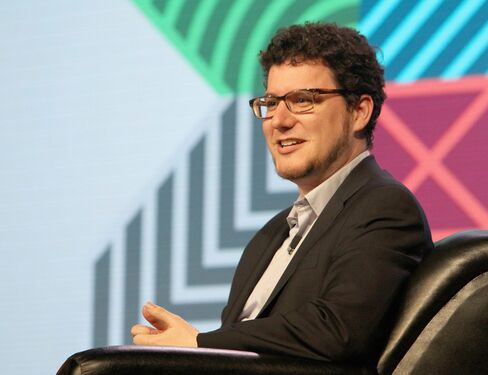
Eric Ries.
Eric Ries

To Ries, 37, the public markets encourage self-destructive behavior, and he sees their dynamics as one reason why the number of U.S. public companies has fallen by half since its peak in 1996. Once companies go public, employees “are on Yahoo Finance every day, and it’s palpable how much that is affecting the decision-making of ordinary managers,” he says. The problem begins with stock market investors who favor companies that show big increases in sales, profits, users, or other measures every quarter. When a company falls short, investors flee, and the stock plummets. Managers, hoping to avoid such jolts, spend too much time focusing on short-term performance. Ries said he's heard the same story many times: halfway through a quarter, an executive realizes the company isn’t on track and starts slashing innovative projects to meet the targets.

Ries's seminal book preached a fail-fast method of building startups where teams get a "minimum viable product" in front of customers as quickly as possible to avoid wasting time and effort. "The Lean Startup" made Ries, who previously worked as a software engineer at the failed virtual world maker There and as a cofounder of the more successful social network IMVU, a revered name among Silicon Valley entrepreneurs. While readers flocked to his startup lessons, no one picked up his stock market proposal -- it was too polarizing. When he decided to do it himself, he started talking to bankers, venture capitalists and regulators, who told him his idea was ridiculous. "People treated me like a barbarian," he says. Undeterred, he spent three years recruiting a team and weighing different ideas, such as charging higher fees for short-term trades. Eventually, the LTSE settled on three reforms that address how executives are paid, how companies and investors share information and how investors vote.

A company that wants to list its stock on Ries’s exchange will have to choose from a menu of LTSE-approved compensation plans designed to make sure executive pay is not tied to short-term stock performance. Ries complains that it’s common to see CEOs or top management getting quarterly or annual bonuses tied to certain metrics like earnings per share, which pushes them to goose the numbers. Ries wants to encourage companies to adopt stock packages that continue vesting even after executives have left the company, which will push them to make healthy long-term moves.

The LTSE also wants to nudge companies and investors to share more information, such as detail on R&D spending. To get investors to participate, the exchange has to tempt them with a reward, so LTSE plans to use voting rights as a carrot. If investors divulge the real name of the beneficial owner to management (as opposed to hiding behind a "street name") they'll start to gain more voting rights the longer they've held their shares. LTSE hopes to make money mostly by selling software tools to companies and collecting listing fees, which could be a tough business, given most companies list on either NYSE or Nasdaq in the U.S. and often choose based on a trusted reputation. As Ries sees it, an LTSE-listed company will have an extra stamp of approval. “You’re advertising to the markets that you’re willing to be held to a higher standard,” Ries says. “This is the gold standard, the most long-term, the most hardcore version of going public.”

Ries’s reforms may not have the intended effects. For example, granting stronger voting rights to long-term shareholders would make takeovers harder, and that could end up protecting complacent managers, says Larry Harris, a professor of finance and business economics at the University of Southern California business school. “The threat of takeover has done far more to get good behavior out of corporations than perhaps anything else,” he says. "I suspect a sophisticated investor may shun” an exchange that creates obstacles to investors who want to shake things up.

Getting SEC approval can also be a painful process, especially when trying to change the status quo. Like Ries, Brad Katsuyama, a hero of Michael Lewis's 2014 book, "Flash Boys," is trying to address what he sees as the shortcomings of existing markets. Katsuyama has spent the better part of a year trying to get SEC approval for the Investors Exchange, which he says neutralizes high-frequency traders' unfair advantage. Incumbents aren't happy. NYSE slammed the proposal as "unfair" and "opaque" in a November letter to regulators. Nasdaq last month warned the SEC that if it approved IEX's application, a lawsuit challenging the decision would likely succeed. "Any time an exchange wants to do something significantly different, it's likely to come under a lot of scrutiny and take a long time," said Tyler Gellasch, executive director of investor trade group Healthy Markets.

And while Silicon Valley has successfully overturned many major industries, it hasn't had any luck with entrenched Wall Street traditions. Google's 2004 attempt during its IPO to distribute its shares more equitably via a "Dutch" auction led to a disappointing first day of trading and never caught on. Marc Andreessen sees Google's unorthodox IPO as "a great case study and a cautionary tale," he said. "A big part of what Eric's trying to do is make sure that obviously doesn't happen."

If Ries gets the go-ahead from the SEC, he will face what may turn out to be his biggest challenge: persuading a company to be first to list on LTSE. Since it could be years before the LTSE gets SEC approval, Ries isn't courting Uber, Airbnb or its peers. Instead he’s connecting with mid-size startup founders, some of whom have invested in the LTSE. In the next few years, Ries hopes a handful of these companies will emerge as strong IPO candidates. If he’s lucky, one will be confident enough to be a pioneer. “There’s a real collective action problem here,” he said. “As an industry, we all want to see these changes happen, but there’s always a little bit of an incentive for any individual actor to say, this isn’t my fight – I’ll wait and let somebody else take it on. I don’t begrudge those people. But if everyone does that, change doesn’t happen.”